May 26, 2026 • Marlowe Finch • 10 min reading time • Specs verified June 4, 2026
Epson vs. ViewSonic vs. BenQ: Sorting Out High-Lumen Projectors Where Brand Specs Actually Diverge
You’ve probably noticed that projector boxes throw around numbers like “3,000 lumens” or “4K laser” the way car ads throw around horsepower — technically true, strategically incomplete. A lumen is a measure of total light output. An ANSI lumen is a standardized, more honest version of that number. And “4K” can mean anything from native 4K panels to pixel-shifting tricks that approach — but don’t quite match — true 4K resolution. If you’re shopping Epson, ViewSonic, or BenQ in the $800–$3,000 range for a serious outdoor setup, the spec sheets aren’t lying to you, but they’re not all speaking the same dialect either. This guide cuts through the divergence: where each brand genuinely excels, where the numbers flatter more than they inform, and — critically — which setup wins for your yard, venue, or event context.
Why the Spec Sheet Disagreement Actually Matters Outdoors
Indoors, in a light-controlled room, brightness differences between a 2,500-lumen and a 3,500-lumen projector are largely academic past sundown. Outdoors, they’re everything. Ambient light — from landscape lighting, neighboring windows, or a twilight sky that hasn’t fully darkened — eats into perceived image brightness fast. The practical rule: every doubling of ambient light cuts perceived contrast roughly in half.
This is where Epson, ViewSonic, and BenQ diverge in ways that matter far more than raw lumen claims.
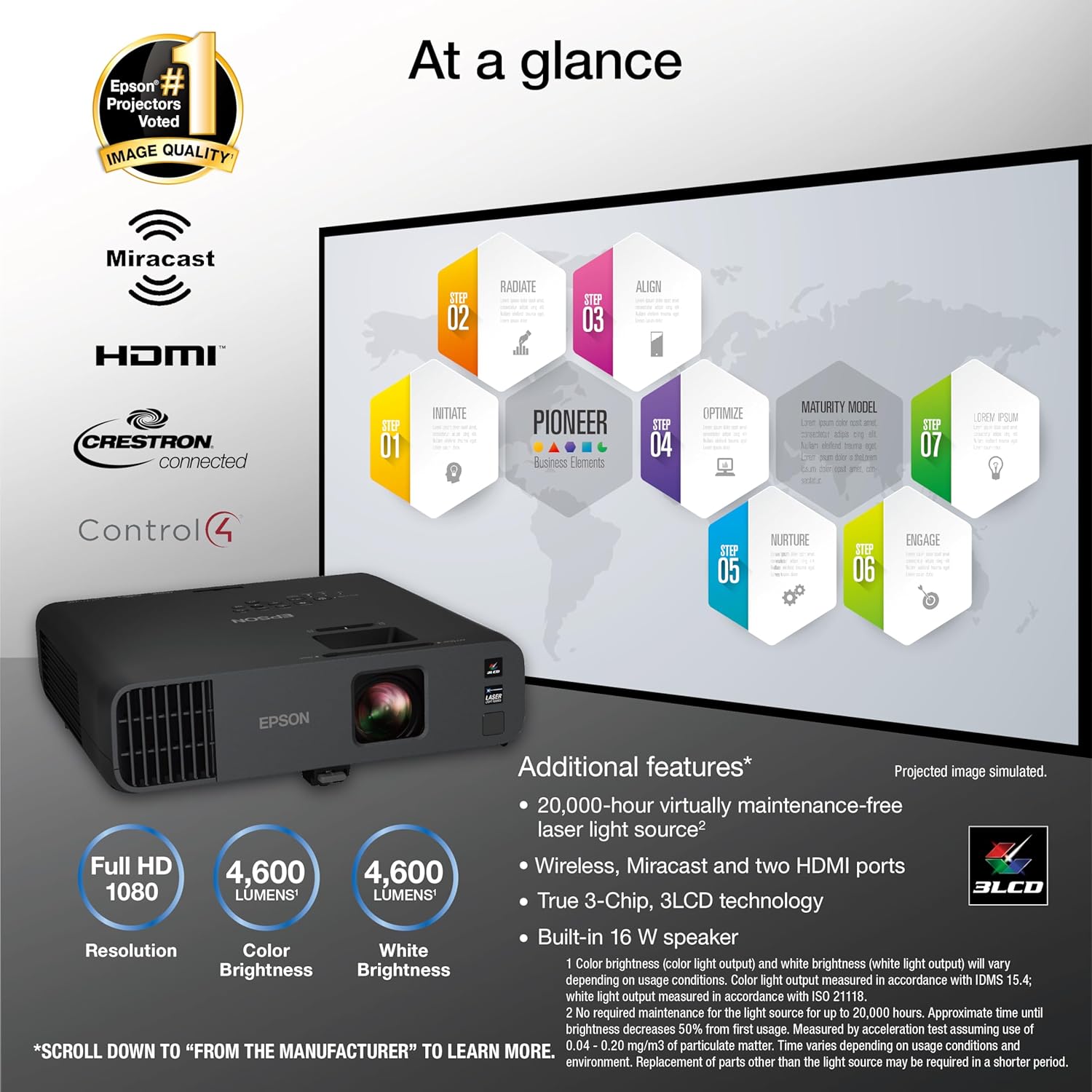
Epson’s approach is laser phosphor with its own 3LCD panel system. The LS800, for example, is spec-sheeted at 4,000 lumens. As documented in the Projector Central full review of the Epson LS800, 3LCD architectures tend to produce more accurate color brightness — the brightness you actually see on colored content — compared to single-chip DLP competitors that quote white brightness, which can look dim and washed-out on anything other than a bright white image.
BenQ’s approach, particularly with the GP20, leans on a single-chip DLP system with smart-home integration baked in. The RTINGS review of the BenQ GP20 flags its native contrast as a genuine strength for outdoor use — the deeper blacks hold up better when you can’t fully eliminate ambient bounce off grass or a light-colored fence. The GP20 is spec-sheeted at 2,100 ISO lumens, which is a more conservative and arguably more honest number than what competitors often publish.
ViewSonic’s M2e and related portable-to-midrange line uses a 1080p LED light source rather than laser phosphor. As noted in the Digital Trends portable projector roundup, LED sources run cooler and quieter than laser alternatives, which matters in intimate outdoor settings where projector fan noise becomes part of the ambient sound experience. The tradeoff is ceiling: LED projectors in this class top out around 1,200–1,400 ANSI lumens in honest real-world terms, meaning they’re best suited to controlled setups — full darkness, shorter throw distances, and ideally a high-gain screen.
The quick numbers:
| Brand / Model | Light Source | Spec’d Lumens | Real-World Range | Native Resolution |
|---|---|---|---|---|
| Epson LS800 | Laser Phosphor | 4,000 lm | ~3,200–3,600 | 1080p (4K-enhanced) |
| BenQ GP20 | Laser | 2,100 ISO lm | ~1,800–2,100 | 1080p |
| ViewSonic M2e | LED | 1,200 ANSI lm | ~900–1,100 | 1080p |
Real-world range figures are drawn from aggregated reviewer measurements reported by Projector Central and RTINGS — not manufacturer claims.
Where Each Brand’s Numbers Actually Diverge
Lumen Inflation and Color Brightness
This is the single biggest gotcha in high-lumen projector shopping. Epson publishes both a white brightness number and a color brightness number — and on the LS800, they’re essentially equal at approximately 4,000 lumens each. That matters because 3LCD technology splits light through three separate panels (one each for red, green, and blue), so colored images get the full light engine behind them. This distinction is documented in the Projector Central full review of the Epson LS800 and is frequently raised in AVS Forum threads focused on high-lumen outdoor projector setups as one of the most underappreciated considerations for first-time buyers.
Single-chip DLP systems — BenQ and many ViewSonic models among them — route all colors through one panel via a spinning color wheel. That means white scenes look as bright as advertised, but color-saturated scenes (think movie posters, animation, or sunset footage) can look noticeably dimmer. If you’re screening feature films with rich color palettes — animation, blockbusters, anything with significant saturation — Epson’s 3LCD approach delivers what it promises. BenQ’s DLP, honest in its ISO lumen claim, is still plenty for content that doesn’t depend on color volume.
Contrast and Black Levels in Ambient Light
Here’s where BenQ earns its place at this price point. The RTINGS review of the BenQ GP20 describes its native contrast ratio as meaningfully stronger than comparable Epson laser projectors in dark scene rendering. Outdoors, this matters in a specific way: if you have any ambient light you can’t eliminate — a neighbor’s porch light, a lit pool, some landscape uplighting — a high-contrast projector holds shadow detail better. Lower-contrast images look flat and gray in those conditions.
ViewSonic’s LED models sit at a disadvantage here. Their contrast ratios are respectable on paper, but the lower absolute brightness means you’re already fighting ambient light, and shadow detail suffers first.
If your venue or yard has uncontrolled ambient light (which most do), the real-world hierarchy is roughly: BenQ GP20 for contrast depth, Epson LS800 for brightness-plus-color, ViewSonic M2e for controlled, low-ambient conditions only.
Throw Distance and Screen Fit
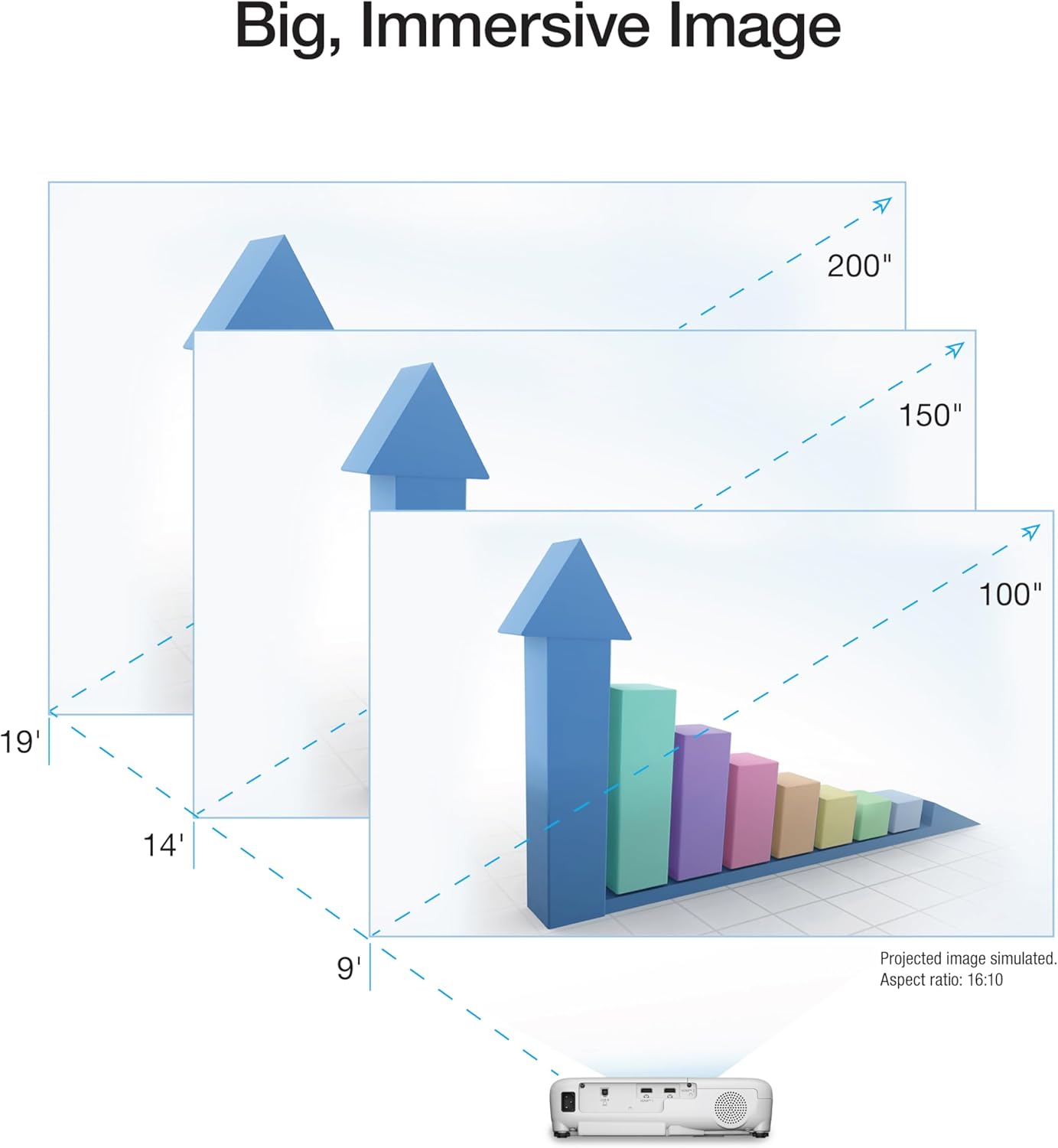
“Throw distance” is how far the projector must sit from the screen to fill it at a given size. Ultra-short throw (UST) projectors sit within one to two feet of the screen; standard throw projectors need ten to fifteen feet or more for a 100-inch image.
The Epson LS800 is a UST laser projector — designed to sit a foot or two in front of the screen. That’s a game-changer for backyard or venue setups where you can’t run a long projector throw without the unit blocking sightlines or requiring a ceiling or pole mount.
BenQ’s GP20 is a standard-throw portable, not a UST model. You’ll need roughly ten to eleven feet of throw to hit a 100-inch image. For open backyard use that’s workable; for tight rooftop or courtyard setups, it’s a real constraint.
ViewSonic’s M2e is standard throw as well, and its lower lumen ceiling means you’ll want the screen closer and smaller — eighty to ninety inches is its practical sweet spot — to maintain image quality.
The Sound & Vision outdoor projector buying guide frames this consideration clearly: throw ratio compatibility with your physical space should come before any lumen or resolution discussion. A projector with a mismatched throw for your yard is the wrong projector regardless of specs.
The Decision Frame: Matching Brand to Use Case
The Premium Option — Epson LS800 for Ambient-Challenged Environments
Epson
$1,399.99
In stock on Amazon
Check price on AmazonIf your priority is maximum brightness for a semi-lit environment — twilight start times, landscape lighting you can’t turn off, a commercial venue with ambient sources — the Epson LS800 is the strongest real-world performer in this tier. Its 3LCD color brightness parity and raw lumen output punch through ambient interference that would wash out competing projectors. The UST form factor is a practical bonus for most venue configurations, eliminating the sightline problems that come with a long-throw unit placed in the middle of a seating area.
Street price runs approximately $2,000–$2,800 depending on retailer. One critical system note: pairing the LS800 with a UST-compatible ALR (Ambient Light Rejecting) screen is not optional — it is load-bearing. A standard gain screen will degrade the image noticeably at this throw distance. Brands like Elite Screens and Silver Ticket offer tensioned short-throw ALR screens in the 100-inch range for roughly $400–$800, which must be budgeted as part of the system cost. B&H Photo Video is consistently cited by reviewers as a reliable retail source for both the projector and compatible screen options, with pre-sale technical support that helps buyers avoid compatibility errors before purchase.
Epson
$1,399.99
In stock on Amazon
Check price on AmazonThe Mid-Tier Option — BenQ GP20 for Controlled, Dark-Optimized Installs
ViewSonic
$979.99
In stock on Amazon
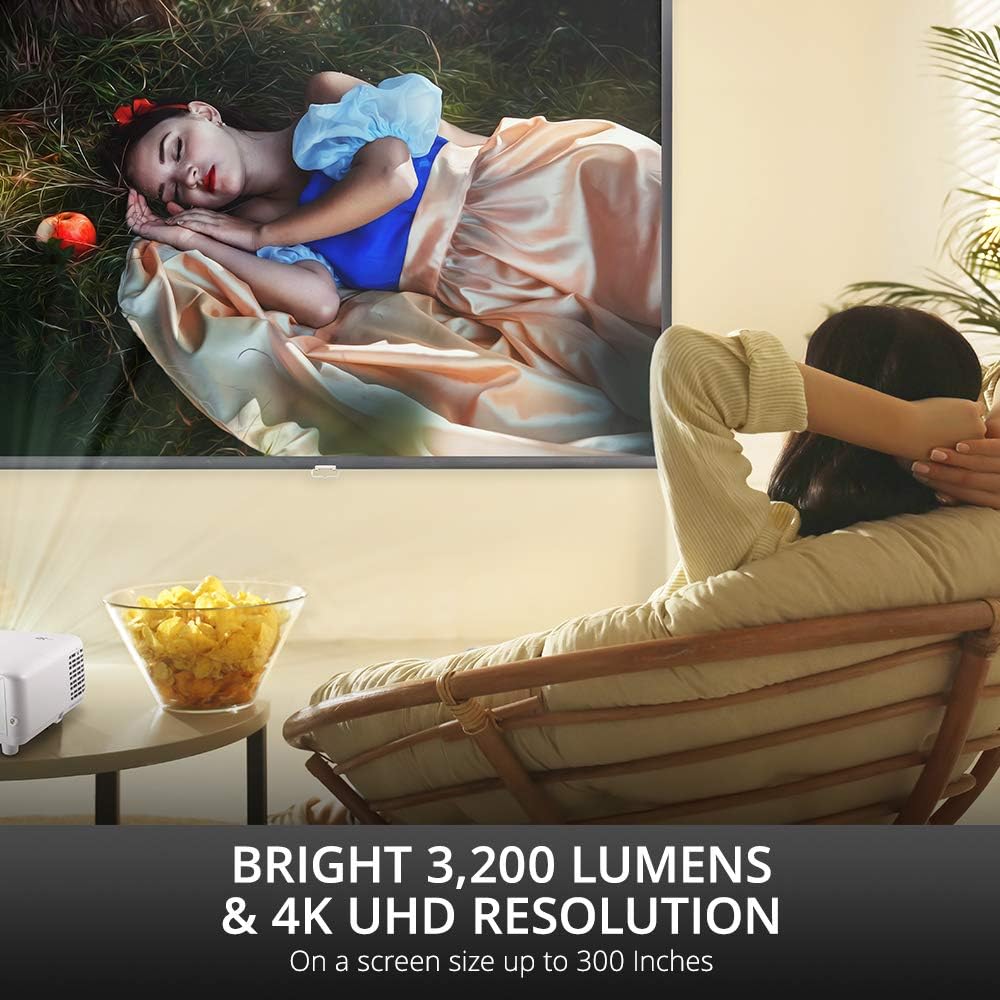
Check price on AmazonFor operators running intimate glamping experiences, boutique hospitality setups, or private backyard cinemas where you can genuinely control ambient light, the BenQ GP20 earns serious consideration. Its ISO lumen rating is conservative and honest, and the RTINGS BenQ GP20 review documents native contrast performance that holds shadow detail in ways that higher-lumen but lower-contrast competitors cannot match. Dark cinematography — nighttime scenes, horror films, anything with significant visual depth — looks qualitatively different on a high-contrast projector. Viewers notice, even if they can’t name why.
Street price lands around $900–$1,200. It pairs well with standard gain screens in the 1.0–1.3 gain range, so no specialized ALR screen is required, and total system cost is more predictable than the Epson pathway. The ten-to-eleven foot throw requirement for a 100-inch image is the chief constraint for tight spaces. AVS Forum community threads on high-lumen outdoor projector setups note repeatedly that buyers who pair a strong-contrast projector with an appropriate screen in a controlled environment often report more viewing satisfaction than buyers who chased raw lumen numbers in the same budget range.
ViewSonic
$979.99
In stock on Amazon
Check price on AmazonThe Budget Option — ViewSonic M2e for Portable, Low-Hassle Deployment
ViewSonic
$749.99
In stock on Amazon
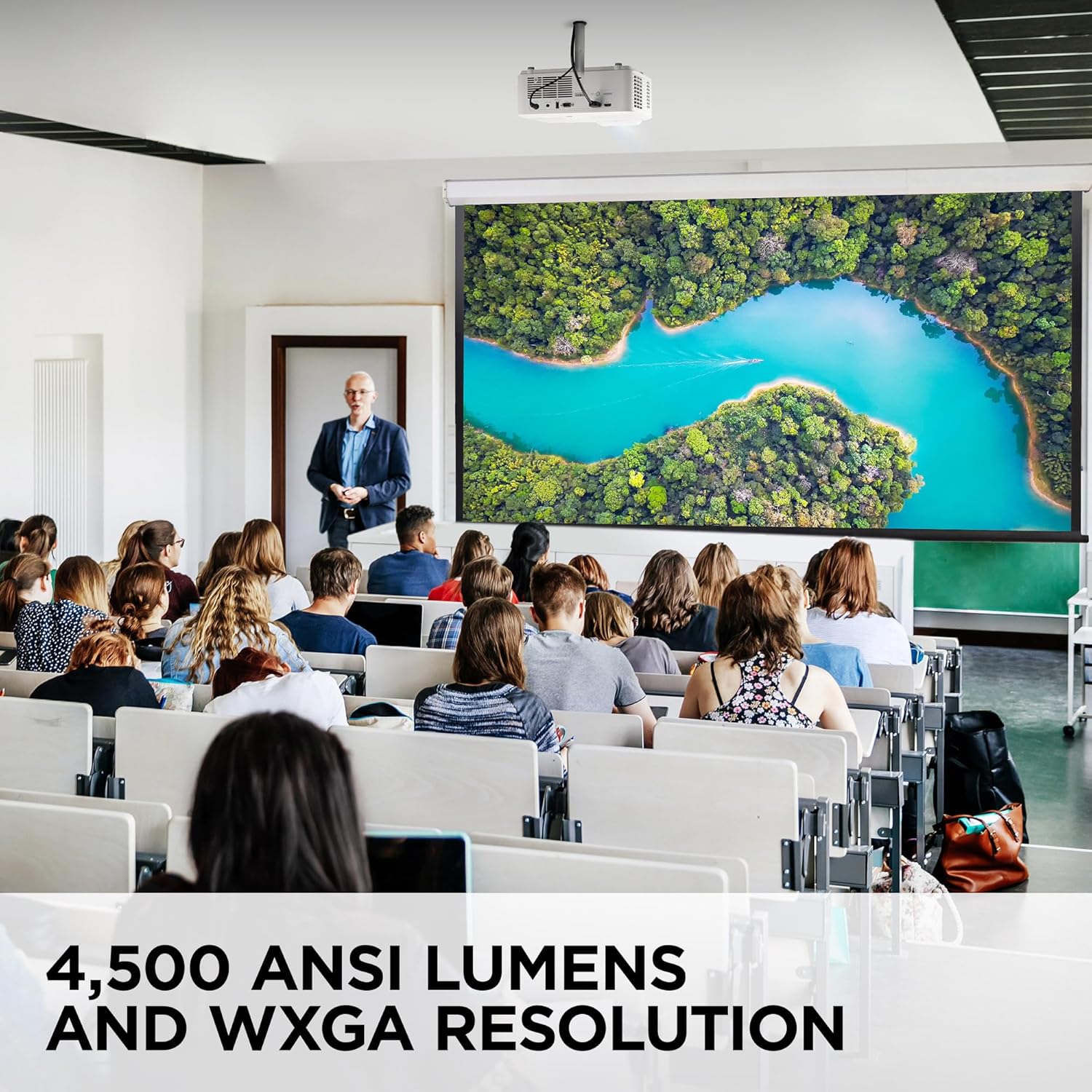
Check price on AmazonThe ViewSonic M2e-class LED portable is not competing with the Epson or BenQ on raw performance — it’s competing on form factor, quiet operation, and low-hassle deployment. The Digital Trends portable projector roundup highlights the M2e’s cooler, quieter LED light engine as a genuine differentiator in settings where projector noise bleeds into the audio experience. For families, casual event operators, and vacation rental owners who want “movie night capable” without a dedicated installation, this is a legitimate and honest choice.
Street price runs approximately $350–$500. It can work with a basic pull-up screen or a flat white wall in a pinch — budget a basic fixed-frame or tripod screen from a brand like Elite Screens in the $80–$200 range for anything approaching a proper outdoor setup. Crutchfield is a useful retail resource for this tier, particularly for buyers who want phone-accessible product guidance before committing. One firm expectation-setter: this projector requires full or near-full darkness to be satisfying. In anything other than a genuinely dark environment, the image will disappoint.
ViewSonic
$749.99
In stock on Amazon
Check price on AmazonThe Hidden Costs That Change the Calculus
One more thing worth naming before you finalize the comparison: the projector price is not the setup price.
Every one of these projectors benefits from external audio — their built-in speakers are functional at best. A single compact Bluetooth speaker or a pair of dedicated outdoor speakers will transform the viewing experience more than a projector upgrade will for many audiences. Budget this as a line item, not an afterthought.
Screen quality compounds the projector investment in both directions. The right screen — matched ALR for UST, appropriate gain for standard-throw — amplifies what a good projector delivers. The wrong screen or a bare wall introduces hotspots, color shift, and gain falloff at wide viewing angles. AVS Forum’s high-lumen outdoor projector community threads document this failure mode repeatedly: buyers who underinvest in the screen and then blame the projector. That pattern shows up across all three brands in this comparison, but it’s most acute with the Epson LS800, where screen compatibility is non-negotiable.
The Sound & Vision outdoor projector buying guide reinforces a point worth repeating here: the weakest link in an outdoor projection system is rarely the projector itself. It’s the screen, the audio, or the ambient light management. Solving those problems before spending up on a higher-lumen unit is almost always the better investment sequence.
The Bottom Line
Epson, ViewSonic, and BenQ are each making honest tradeoffs — they’re just making different ones. Epson wins on brightness-plus-color for ambient-challenged environments. BenQ wins on contrast depth for controlled, dark-optimized installs. ViewSonic wins on portability and simplicity for casual use cases where image perfection isn’t the point.
The divergence in specs isn’t brands deceiving you — it’s brands optimizing for different buyers. Know which buyer you are before you read the box.