May 23, 2026 • Marlowe Finch • 9 min reading time • Specs verified June 4, 2026
Best Portable Projectors Under $300 for Twilight Backyard Screenings
A backyard movie projector is exactly what it sounds like: a self-contained device that throws a large image onto any flat surface — a white sheet, a purpose-built screen, even a light-colored fence. You plug it in (or run it on battery), connect a streaming stick or a phone, and suddenly your patio becomes a theater. The catch is that projectors are much more sensitive to ambient light than a TV is. A spec sheet might claim “5,000 lumens” — lumens being the unit that measures how much light the projector puts out — but that number is almost always measured under lab conditions that don’t match a dimly lit backyard at 8 p.m. in July. This guide cuts through that noise. We’ll tell you which sub-$300 portable projectors actually perform at twilight, what you need alongside them to make a movie night work, and the decision rule that matches the right hardware to your specific situation.
| EDITOR'S PICK[Officially-Licensed App & Auto… | Mid-tier[HAPPRUN Native 1080P Projector](https://www.amazon.com/dp/B0B28G5Y4R?tag=greenflower20-20) | Budget pickMini Projector | |
|---|---|---|---|
| Resolution | Native 1080P | Native 1080P | Full HD 1080P Support |
| Built-in WiFi | ✓ | ✗ | — |
| Built-in Bluetooth | ✓ | ✓ | — |
| Rotation | 360° Stand | — | 270° Rotation |
| Smart Features | App & Auto Focus | — | — |
| Price | $199.99 | $84.94 | $35.99 |
| See on Amazon → | See on Amazon → | See on Amazon → |
Why the Lumen Number on the Box Lies (and What to Look for Instead)
Here’s the uncomfortable truth: manufacturers routinely publish ANSI lumen ratings — ANSI being the standardized brightness measurement — for their projectors in the most favorable test mode possible, often with contrast cranked up and color accuracy set aside. A projector rated at 300 ANSI lumens in a proper lab measurement may be listed as “5,000 lumens” using the manufacturer’s own “equivalent brightness” math. Those two numbers describe the same device.
Projector Central’s portable projector coverage uses real-world lumen measurements and consistently finds that budget DLP pico projectors — DLP (Digital Light Processing) being the most common chip technology in this price range — land between 80 and 350 actual ANSI lumens. At twilight in a typical suburban backyard, you need at least 150 true ANSI lumens to get a watchable image on a 100-inch screen. Below 100 ANSI lumens, you’re waiting for full dark before the picture looks acceptable.
The second number to interrogate is contrast ratio — the difference between the brightest white and darkest black the projector can display. Budget projectors often claim 1,000:1 or higher, but RTINGS.com’s projector measurement methodology notes that native contrast (measured without dynamic iris tricks) in this price tier typically falls between 500:1 and 900:1. That’s fine for movie night; it’s not fine for anyone expecting TV-quality black levels.
The honest brightness tiers for sub-$300 portables:
| Claimed lumens (marketing) | Estimated real ANSI lumens | Usable condition |
|---|---|---|
| ”1,500–5,000 lumen equivalent” | 80–150 | Full dark only (9:30 p.m.+) |
| “500–900 ANSI” | 150–280 | Deep twilight (8:30–9:00 p.m.) |
| “300–500 ANSI” (honest brands) | 250–400 | Dusk-to-dark (8:00 p.m. onward) |
This is the column you want to optimize for if twilight screenings — starting while kids are still awake — are your actual use case.
The Picks: What the Research Says About Each Contender
Anker Nebula Capsule 3 (~$270–$300)
The Capsule 3 is as close to a consensus pick as this category has. It runs Android TV natively — meaning you don’t need a separate streaming stick — outputs 200 ANSI lumens (per Anker’s own spec sheet, which Digital Trends’ portable projector roundup treats as a credible figure rather than inflated marketing), and packs a 2.5-hour battery. The 1080p resolution is a genuine differentiator at this price; most competitors top out at 720p.
Owners consistently report that the built-in 8W speaker is adequate for groups of four to six in a quiet yard, though it starts to struggle past ten feet from the projector. The autofocus works quickly and reliably according to aggregated owner reviews. The tradeoff: 200 lumens is genuinely borderline for twilight. On a white sheet or matte white screen under a suburban sky at 8:15 p.m., you’ll see the image, but it won’t pop. By 9:00 p.m., it’s comfortable.
Best for: Families who want zero setup complexity, value the self-contained Android TV experience, and can schedule their screening to start after full dark or have a yard with minimal light bleed from neighboring homes.
Kodak Luma 350 (~$220–$260)
The Luma 350 is the underdog pick that CNET’s outdoor projector coverage has flagged as a strong value play. Kodak rates it at 350 ANSI lumens — a number that, unusually for this category, aligns with third-party reviewer impressions rather than marketing inflation. The resolution is 1080p, it runs on its own battery for roughly 2.5 hours, and the form factor is compact enough for a backpack.
The weak points are also consistent across reviews: the built-in speaker (5W) is thin, the Android OS is a slightly older build than what Anker ships, and the autofocus is slower on startup than the Capsule 3. But 350 honest lumens beats 200 honest lumens for twilight use, and that brightness advantage is real and meaningful when you’re trying to start at 8:00 p.m. rather than 9:00 p.m.
Best for: Buyers who prioritize screen brightness over ecosystem polish and are willing to manage a slightly clunkier interface to gain that extra 30–45 minutes of usable dusk viewing.
ViewSonic M2e (~$320–$350, occasionally dips to $280 on sale)
Technically above the $300 ceiling, but it surfaces in this conversation constantly because it sells at or below $300 often enough during sales cycles that ignoring it here would be a disservice. The M2e outputs 400 ANSI lumens, which Projector Central’s coverage treats as one of the most accurately rated portable projectors in the category. It also runs Harman Kardon speakers (dual 3W), which owners reliably single out as the best audio in the compact portable segment.
The M2e runs its own smart platform (ViewSonic’s built-in OS), which is functional but less intuitive than Android TV. It requires AC power — no built-in battery — which matters for untethered backyard use unless you’re running an extension cord or power station.
Best for: Buyers who have AC power access in their yard, prioritize real-world brightness and audio quality, and can stretch the budget slightly when a sale hits.
The Hidden Costs That Turn a $250 Projector Into a $700 Setup
This is the math most buying guides skip, and it’s worth naming explicitly because it changes the decision.
What you likely still need after buying the projector:
- Screen: A white bedsheet works, but a proper portable projection screen — something like the Elite Screens Yard Master 2 at 120 inches — adds $80–$180 and meaningfully improves sharpness and brightness uniformity. The gain rating (a number representing how efficiently the screen reflects light back to viewers) matters here: a 1.1-gain matte white surface is the right match for budget projectors, which distribute their limited lumens across the whole image rather than concentrating them.
- External speaker: If your group is larger than six or your yard has any ambient noise (wind, neighbors, street), the built-in speaker on any projector in this range will underwhelm. A Bluetooth speaker rated for outdoor use — Anker Soundcore or JBL Charge series — adds $40–$80.
- Power source: If you don’t have an outdoor outlet near your screening spot, a portable power station (Jackery 300 or equivalent) adds $180–$250.
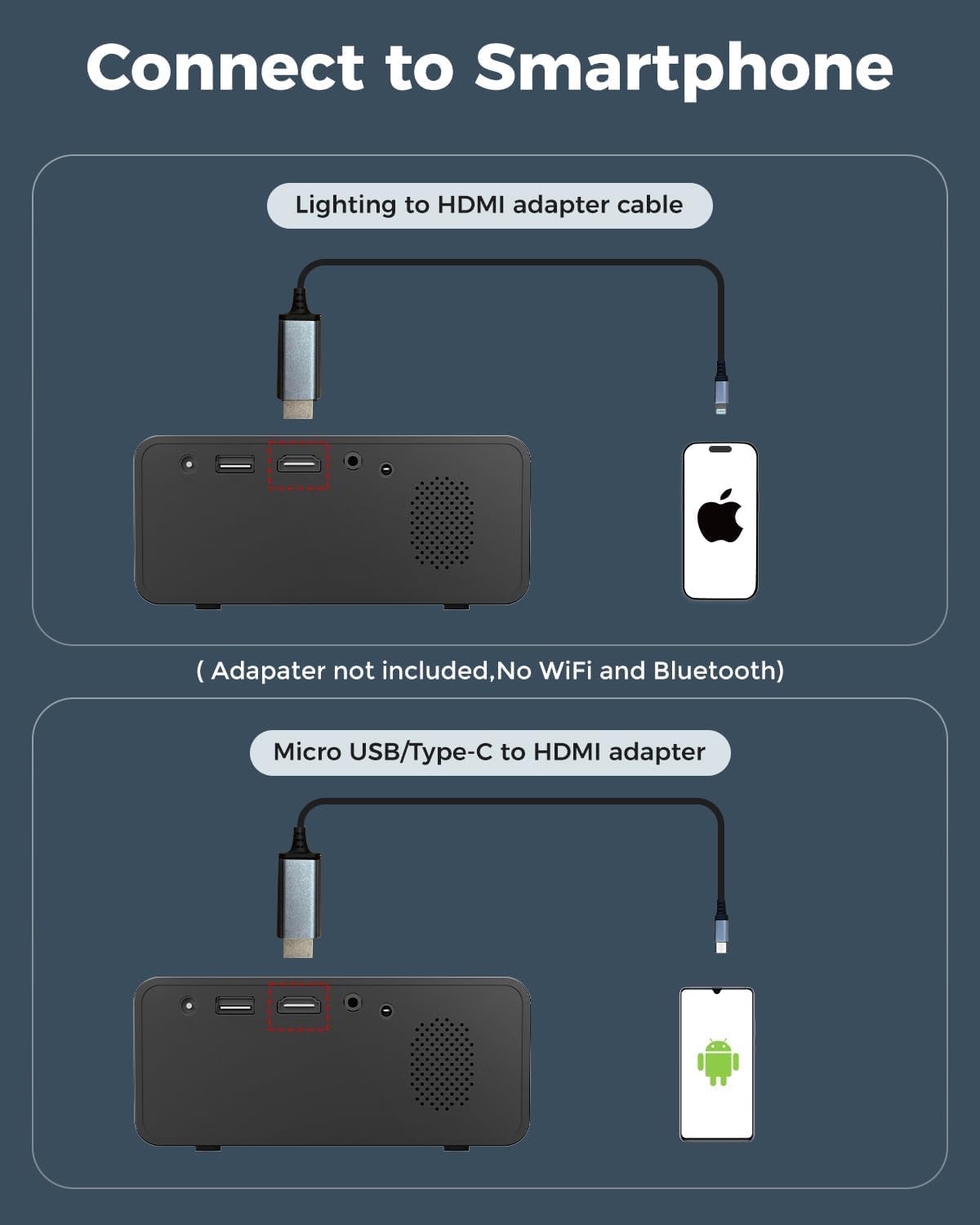
- Streaming source: The Capsule 3 and Luma 350 have Android TV built in; the ViewSonic M2e needs a Chromecast or Fire TV Stick ($35–$55) for the best streaming experience.
The budget reality check:
A $260 Kodak Luma 350 + $120 Elite Screens Yard Master 2 + $60 Anker Soundcore speaker + $0 (existing outlet within reach) = $440 all-in. That’s a responsible number to plan around, not $260.
If you need a power station, that same setup hits $620–$680. At that point, the value calculus starts to shift toward the mid-range tier — projectors like the Optoma ML1080 — where you get significantly more brightness for an incremental spend.
Making the Decision: The If-Then Framework
This is the decision tree that honest research points to. Apply it to your specific situation before buying.
If your yard is genuinely dark by 8:30 p.m. and you’ll always wait for full dark: The Anker Nebula Capsule 3 is the right call. The Android TV integration, reliable autofocus, and 1080p resolution make it the cleanest experience at its price. The 200-lumen output is sufficient when ambient light is low.
If you want to start at dusk — 7:45 to 8:15 p.m. — and you have younger kids on an earlier schedule: Spend the extra $30–$40 for the Kodak Luma 350. The brightness advantage is the only specification in this category that directly determines whether you can start when you want to start. It’s worth more than any software feature.
If you have AC power access and can occasionally catch a sale: Wait for the ViewSonic M2e to dip to $280–$295. The 400-lumen output and Harman Kardon audio are a genuine step up, and the lack of a battery is a non-issue for most backyard setups where an extension cord is already in play.
If your total budget including screen and audio is under $400: Buy the Luma 350, skip the external speaker for now, and use a white sheet or blank fence. Use the remaining budget for a proper screen when you see one on sale. The screen upgrade will improve your picture more than any projector swap in this price band.
If your group regularly exceeds 15 people or you’re running HOA or hospitality events: Skip this tier entirely. You need 800+ true ANSI lumens and commercial-reliability features that no sub-$300 portable delivers. The Epson EF-21 or BenQ GP20 are the right starting point for that use case, at roughly 3–5x the cost — but also 3–5x the performance in real ambient light conditions.
The Bottom Line
The sub-$300 portable projector market is real and functional, but only if you’re honest about what it delivers. These are twilight-to-dark devices, not sunset devices. The manufacturers who rate lumens honestly — Kodak and ViewSonic, notably — give you a more reliable purchase decision than those who inflate numbers. Cross-referencing Projector Central’s real-world lumen data with RTINGS.com’s contrast methodology and Digital Trends’ owner-aggregated reviews consistently surfaces the same three names in this category. The Kodak Luma 350 is the brightness pick. The Anker Nebula Capsule 3 is the experience pick. The ViewSonic M2e is the performance pick when the budget stretches.
Budget the full setup cost before you buy any of them. The projector is the headline; the screen, audio, and power infrastructure are what determine whether a movie night actually works.